Bedroom Setup for Better Sleep
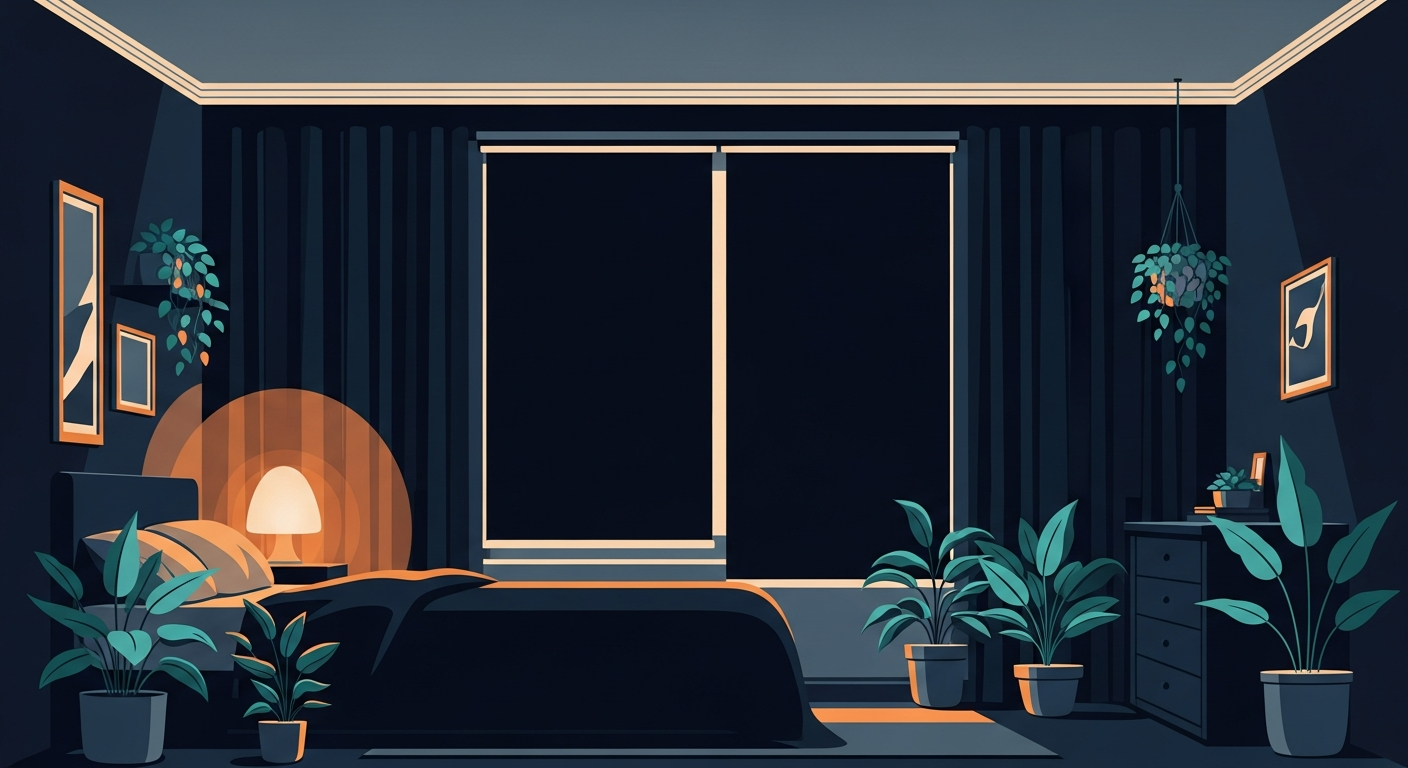
A better bedtime routine helps, but the room matters too. Your bedroom can either support sleep or keep sending wake-up signals all night. The good news is that many bedroom fixes are simple — and the impact can show up quickly.
Quick answer
A better sleep bedroom is dark, quiet, cool, and low-distraction. Start by blocking light, reducing sudden noise, cooling the room, moving your phone away from the bed, and preparing the room before you are already tired.
- Best starting point: Fix light first, especially screens and morning light leaks.
- Common mistake: Improving bedtime habits while leaving the bedroom bright, noisy, or phone-centered.
- Use this calculator: Sleep Calculator to test whether environment changes improve wake-ups.
What is the best bedroom setup for sleep?
For most people, the ideal sleep environment is dark, quiet, cool, and free of phone distractions. These four factors address the most common environmental sleep disruptions. Improving all four at once is often more effective than fixing just one.
Bedroom sleep checklist
| Sleep factor | What to check | Quick fix |
|---|---|---|
| Light | Streetlight, LEDs, phone glow | Blackout curtains, eye mask, cover LEDs |
| Noise | Sudden sounds, roommates, traffic | Fan, white noise, earplugs |
| Temperature | Sweating, heavy bedding | Lighter bedding, fan, cooler room |
| Phone | Scrolling, alerts, alarm checking | Charge across room, do-not-disturb |
| Bed association | Work or eating in bed | Keep bed mainly for sleep |
How to make your room darker
Light tells your brain it is time to be awake — even small lights can bother some sleepers. Check for: streetlight leaking around curtains, bright alarm clocks, charging lights, TV standby lights, phone screens, and hallway light under the door.
Fixes: blackout curtains or curtain liners, eye mask, tape over tiny LEDs, clock faces turned away, phone charged outside the room. If you wake too early, morning light leaks are the first thing to check. Use morning light intentionally after waking — but not before your alarm.
How to reduce sleep-disrupting noise
Steady background noise is easier to ignore than sudden noise. The problem is usually not sound itself, but unpredictable spikes.
Try: a fan, white noise machine, earplugs, rugs or curtains to soften echoes, or a door draft stopper. If you live with roommates or family, explain your sleep window clearly — sleep is not "free time" for interruptions.
Temperature and bedding tips
Many people sleep better in a cooler room. Heat can cause restlessness, sweating, and awakenings. Try lowering the thermostat, using lighter bedding, breathable sleepwear, a fan for air movement, or separate blankets if sharing a bed. A warm shower before bed can also support a cooling-down routine.
Phone rules for better sleep
Phones are one of the biggest bedroom disruptors because they combine light, stimulation, and unpredictability. Choose one:
- Best: Phone charges outside the bedroom.
- Good: Phone across the room on do-not-disturb.
- Minimum: Phone face down, notifications off, no scrolling in bed.
If you use your phone as an alarm, consider a basic alarm clock. It removes a major sleep temptation for a small cost. Track whether your room changes affect sleep latency after making changes.
Bedroom reset plan for tonight
- Cover or remove visible lights (LEDs, clock face, charging cables).
- Set your alarm before wind-down so it is not a last-minute task.
- Put your phone across the room or outside the bedroom.
- Turn on a fan or white noise if sudden sounds bother you.
- Lower the room temperature if possible.
Do not wait until bedtime to fix the room — set it up during wind-down. This prevents the "one more thing" loop that delays sleep.
FAQs
What is the best bedroom environment for sleep?
For many people, the best sleep environment is dark, quiet, cool, and free of phone distractions.
Should I keep my phone out of the bedroom?
If possible, yes. At minimum, keep it across the room with notifications off so it does not become part of your bedtime routine.
Why do I wake up too early in my room?
Morning light, noise, temperature, stress, alcohol, or schedule timing can all contribute. Start by checking light leaks and noise changes near your wake-up time.
Does white noise actually help sleep?
For many people, steady background noise masks disruptive sudden sounds. It does not work for everyone — test it for a few nights to see if it helps you.
Sources
Related articles & calculators
- Sleep Latency — track whether your room changes affect sleep latency
- Morning Light for Sleep — use morning light intentionally after waking
- Sleep Schedule by Wake-Up Time — match your room reset to a target bedtime
- When to See a Doctor for Sleep Problems
- All Sleep Planning Guides →
Educational use only. This article is for general sleep-planning education and is not medical advice. Consult a qualified healthcare professional for persistent sleep problems.